Atlas
Semantic memory with a 3D brain atlas and MCP tools — typed, deduplicated memories by meaning.
Node.jsSQLiteLanceDBThree.jsMCP
Overview
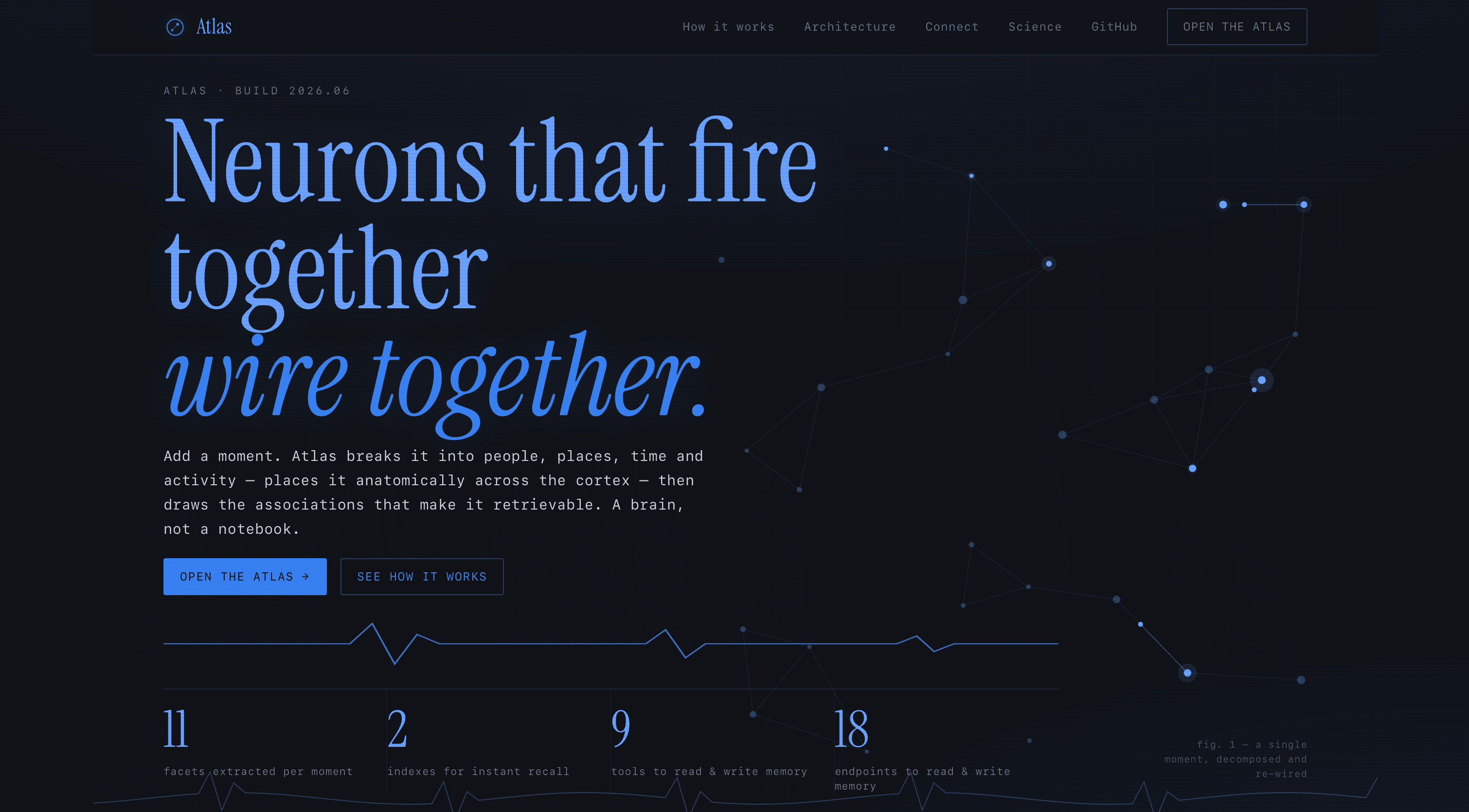
Brain-inspired memory that stores and retrieves by meaning, not keywords. SQLite is the source of truth, LanceDB handles vectors, Transformers.js does embeddings on-device. Memories light up across 11 brain regions in a Three.js atlas. Ships as an npm package and stdio MCP server.
Highlights
- Write pipeline: extract entities → embed → dedupe → persist to SQLite + LanceDB
- Nine MCP tools for add, search, related, entities, and CRUD from any MCP client
- 3D brain view maps memories to cortical and subcortical regions
- Conservative entity linking — ambiguous matches stay separate instead of false-merging
Stack
- Node.js
- HTTP API and MCP stdio server
- SQLite
- Source-of-truth memory store
- LanceDB
- Local vector index (384-dim)
- Transformers.js
- On-device embeddings
- Three.js
- 3D brain atlas visualization
- MCP
- Memory tools for agent clients